My First Trash Violation in Japan
- Published in japan-life
- Date 2025-03-25
- 3 min read


"Cute little torii" you might think, looking at the cover photo. Except… it’s actually a sign of a big problem.
Out here in the inaka, you’ll find little torii gates like this on nearly every patch of unoccupied land. They're often accompanied by much less subtle warnings—threats of fines, surveillance cameras, and even jail time. That’s because fuhō tōki (illegal dumping) is a serious problem in Japan.
The city will only collect your trash if it’s put in the correct type of bin, using designated garbage bags, and only on specific days. And it’s not free—you need to buy official bags (though they’re not terribly expensive).
In addition to regular trash, there's "recyclable" garbage—cans, bottles, paper, and cardboard—collected separately, about once every two weeks in my area. But you need to rinse everything, tie it up neatly with string, and carry it to a designated drop-off point.
I put "recyclable" in quotes because—let’s be honest—a lot of it ends up being burned with everything else. Yes, even after all that effort. And everyone knows it.
If you have a car, you could take your recyclables to a nearby supermarket drop-off spot. That is, if you have a car. And if there’s any space left when you get there.
As for larger items like jitenshas, futons, or broken furniture, you need to call a recycling shop to come pick them up—and that can be pricey. I once paid 5,000 yen to have some failed YafuOku acquisitions hauled away.
Sometimes, especially in wealthier neighborhoods, a recycling shop will drive around in a little key-tora truck, calling out for paper or scrap metal. If you’re lucky, they’ll take it for free. They especially love old electronics, which often end up resold on—guess where—YafuOku.
In the end, it’s no wonder people sometimes get fed up and just dump their trash where no one’s looking. And that’s how we end up with warning signs, fake security cameras, giant eye posters, and even little torii gates set up to ward off dumpers. Why a torii? Because it’s a holy symbol in Japan—you’re not just littering anymore, you’re desecrating.
Japan’s garbage collection system is one of those things that seems beautiful at first glance—clean, organized, respectful. But once you dig deeper, it starts to feel… a little broken.
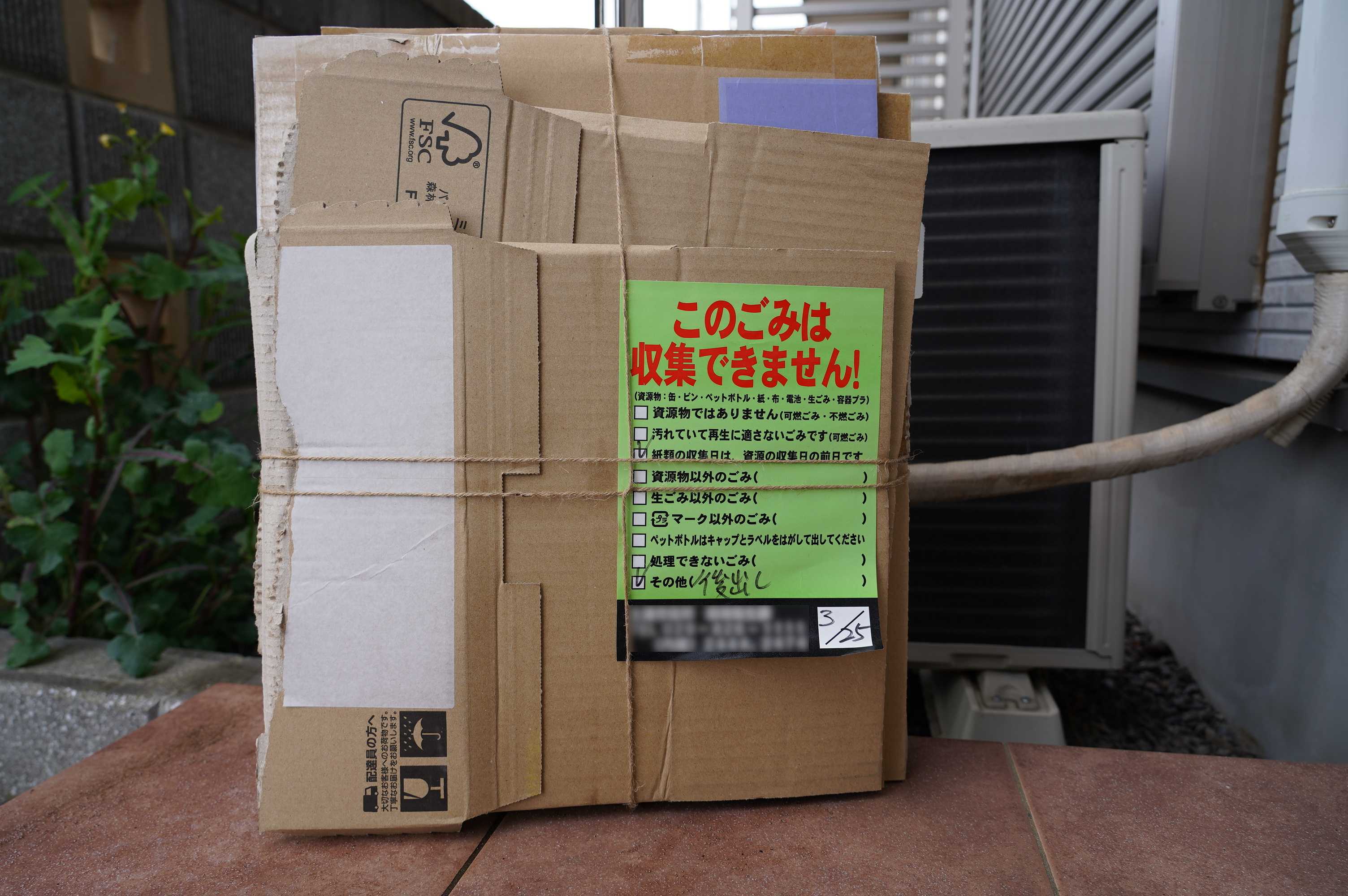
Below is the violation sticker I received for putting out my cardboard boxes on the wrong day. Oops.